Sep 26, 2026
By AziMiner Team
How Solar Power, Batteries and AI Support Bitcoin Mining
Solar generates power, batteries store it, and the grid covers shortfalls. See how AI helps manage these sources and the mining equipment they support.
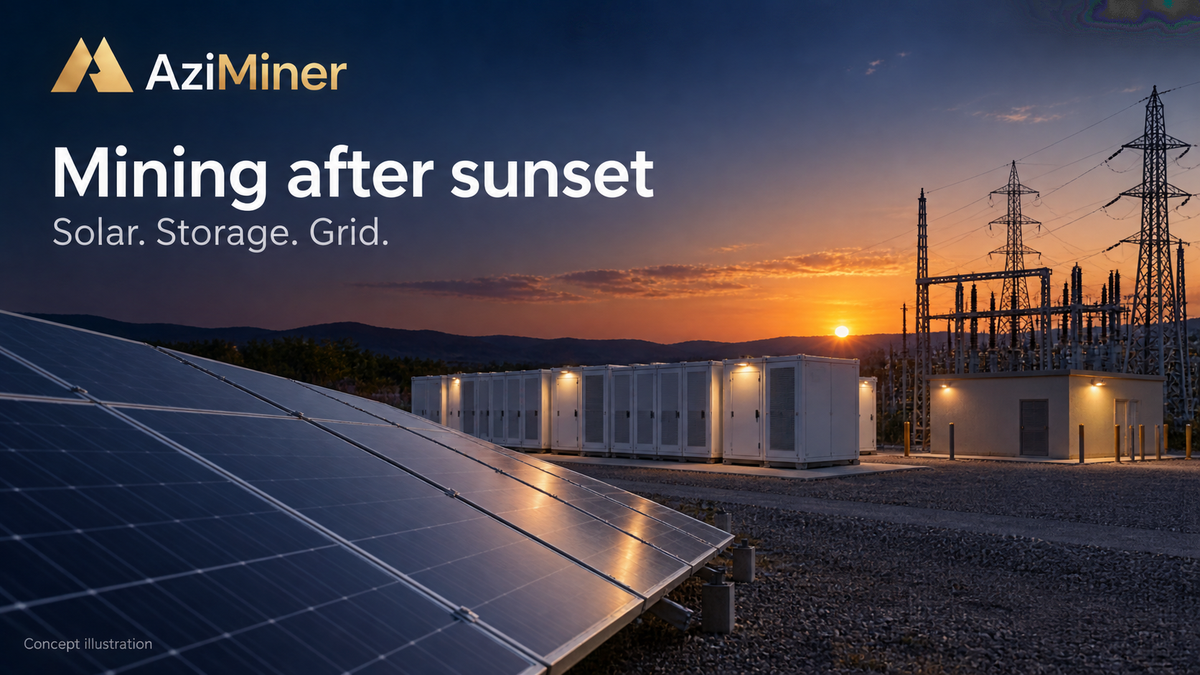
<p>Solar-powered Bitcoin mining can continue after sunset when the operation has other ways to supply electricity. Solar panels generate power during daylight, batteries store energy for later use, and a grid connection can cover a shortfall. Together, they give an operator more options than relying on sunlight alone.</p>
<p>The question is what happens between those sources: when the batteries charge, how long they can supply the equipment, and when grid power is needed.</p>
<h2>What powers the mining computers?</h2>
<p>Bitcoin mining uses specialised computers that repeatedly perform calculations while competing to add blocks to the network. The machines need electricity whenever they are operating, along with power for supporting equipment such as cooling.</p>
<p>The electricity source does not change Bitcoin’s mining rules. Solar-powered equipment competes under the same network rules as equipment using other sources. Bitcoin’s <a href="https://developer.bitcoin.org/devguide/mining.html">mining documentation</a> explains how that work is performed.</p>
<p>For the operator, the energy system is a practical part of running the equipment. For a customer, it helps explain the service behind a mining plan.</p>
<h2>The three parts of a hybrid energy system</h2>
<h3>1. Solar panels generate electricity</h3>
<p>Photovoltaic panels turn sunlight into electricity. Their output changes with available sunlight, so an array does not deliver the same power throughout the day. Inverters convert the panels’ direct-current output into alternating current where the installation requires it. The <a href="https://www.eia.gov/energyexplained/solar/photovoltaics-and-electricity.php">U.S. Energy Information Administration explains how photovoltaic systems work</a>.</p>
<p>At a mining site, that electricity can help supply the equipment. Available surplus can also charge batteries, subject to the system’s design and storage limits.</p>
<h3>2. Batteries hold energy for later</h3>
<p>Batteries move some electricity use to a different time from when the energy was generated. That can help cover a passing cloud or supply equipment after sunset.</p>
<p>Two limits matter: how much energy the battery holds and how much power it can deliver at once. Storage also loses some energy during charging and discharge. The <a href="https://www.energy.gov/cmei/systems/solar-integration-solar-energy-and-storage-basics">U.S. Department of Energy’s solar and storage guide</a> explains these distinctions.</p>
<h3>3. Grid power covers a shortfall</h3>
<p>A grid-connected system can draw electricity when solar generation and available battery power do not meet demand. This gives the operation another supply option during the night or periods of low solar production.</p>
<p>Having a grid connection does not mean batteries are unnecessary. Each part serves a different role, and the control system determines how they work together.</p>
<h2>What happens when the sun goes down?</h2>
<p>In the operating model described by AziMiner, solar generation, battery storage and grid backup work together. Stored energy supports operation beyond daylight, with grid supply available when needed.</p>
<p>That does not mean every evening follows an identical schedule. The available charge, equipment demand and operating settings affect how the system responds.</p>
<p>A useful way to picture the transition is:</p>
<ul>
<li><strong>During daylight:</strong> solar generation contributes to the equipment’s power supply, with available surplus stored where possible.</li>
<li><strong>As sunlight falls:</strong> stored energy can contribute more of the supply.</li>
<li><strong>When available solar and battery power are insufficient:</strong> grid electricity can cover the gap, subject to grid availability and the installation’s limits.</li>
</ul>
<p>This describes the power arrangement. It does not establish a particular site’s uptime or the percentage of its electricity supplied by each source.</p>
<h2>How much battery storage is enough?</h2>
<p>The answer depends on the electrical load and the intended operating period.</p>
<p><strong>Illustrative calculation, not an AziMiner specification:</strong> a constant 100-kilowatt load would require 400 kilowatt-hours of delivered energy to operate for four hours. An actual battery installation needs to account for losses, reserve settings and discharge limits.</p>
<p>This is why “we have batteries” is only the beginning of an explanation. Capacity and the load they serve determine what those batteries can do.</p>
<h2>Where does AI fit?</h2>
<p>AziMiner describes using AI to monitor energy use, equipment performance and operating conditions. In this model, software supports decisions about power use and hardware settings.</p>
<p>Think of the management system as watching several things together: available generation, stored energy, equipment temperatures and demand. The useful question is which measurements it receives and which adjustments it can actually make.</p>
<p>For example, if equipment temperatures rise, a management system may flag the issue or adjust supported settings within safe operating limits. Any claimed improvement should be measured against operating data.</p>
<p>AI does not choose Bitcoin’s next winning miner, change the network’s difficulty or make an individual calculation certain to succeed. Its role here is operational management.</p>
<h2>Does solar power mean cheaper mining?</h2>
<p>It can affect operating costs, but the word “solar” is not enough to calculate a saving. A meaningful comparison needs the cost of the installation, financing, maintenance, storage and any electricity still purchased from the grid.</p>
<p>It also needs a defined period. One sunny afternoon cannot show the energy cost of an entire year.</p>
<p>For a customer comparing plans, the contract remains the place to check charges and payment terms. Lower operating costs do not automatically establish a particular customer return. Our guide to <a href="https://aziminer.com/blog/choosing-a-cloud-mining-plan">choosing a cloud mining plan</a> explains what to compare.</p>
<h2>Questions about solar-powered Bitcoin mining</h2>
<h3>Can mining continue at night?</h3>
<p>Yes, if sufficient stored energy or another electricity supply is available. Using solar during the day does not require the equipment to stop at sunset.</p>
<h3>Does solar-powered mean completely off-grid?</h3>
<p>No. A system can use solar generation while remaining connected to the grid. Claims such as “100% solar” or “off-grid” need their own supporting evidence.</p>
<h3>Does having three power sources guarantee uninterrupted operation?</h3>
<p>No. Equipment faults, maintenance and supply interruptions can still affect operation. Multiple supply options provide flexibility; actual uptime requires operational records.</p>
<h3>What evidence helps explain the energy mix?</h3>
<p>Useful records include measured solar generation, battery charging and discharge, grid consumption and the period covered. These figures help distinguish an installed system’s capacity from the energy it actually supplies.</p>
<h2>Understand the operation behind the plan</h2>
<p>Solar generation, batteries and grid backup each answer a different part of the power question. Together, they explain how a mining operation can use sunlight without depending on daylight alone.</p>
<p>AziMiner’s stated model combines this energy arrangement with managed mining equipment. Customers choose a plan while the operator handles the hardware and its operation.</p>
<p>If you are new to the customer side, read <a href="https://aziminer.com/blog/how-bitcoin-cloud-mining-works">how Bitcoin cloud mining works</a> before comparing the available plans.</p>
<p><strong><a href="https://aziminer.com/plans">View Mining Plans</a></strong></p>